Sewer line repair in Aurora
Fix one bad section of pipe instead of replacing the whole line, when the rest of it is still sound.
What goes wrong, and how it gets fixed
Pick a problem the camera might find, then see what each repair digs up.
What goes wrong
A camera inspection shows which of these you have and how far down the line it is. Ask for the video and a footage count to each problem.
Roots at a joint
Roots find the joints in old clay pipe, especially under mature cottonwoods, maples and elms. Cabling or hydro jetting cuts them back, but a line that clogs again within weeks usually has roots coming through a joint. Ask whether a liner or a repair at that joint beats repeated cleaning.
Belly (sag)
A low spot where the pipe has settled, so waste and water sit instead of draining. Shifting clay soil or poorly compacted backfill can cause it, and on camera it shows as standing water. Cabling never fixes it: the usual fix is digging up that section and re-bedding or replacing it. A deep belly can rule out trenchless.
Offset joint
One pipe section has shifted relative to the next, leaving a lip that catches debris. Expansive clay that swells when wet and shrinks when dry works on buried pipe for decades, which is why a line that tested fine ten years ago can have an offset joint today.
Crack or collapse
Cracks, holes, and pipe gone flat or egg-shaped. Orangeburg, a tar-paper pipe in some homes built from roughly 1945 to 1972, flattens with age, and cast iron can rust through on the bottom. One cracked section in a sound line can be a spot repair. Damage all along the line usually means replacement, and a fully collapsed pipe can rule out trenchless.
How it gets fixed
The hatched ground is what gets dug up. The camera footage should decide the method, not the sales pitch.
Spot repair: one pit
One pit over the bad section, which is cut out and replaced with a new piece joined to the old pipe. The right call when the camera shows one problem in an otherwise healthy line. If there is trouble every few feet, a repair just moves the next failure down the line.
Open trench: dig the whole line
The traditional replacement: a trench along the line, new pipe laid in, then backfilled. It is the fallback when trenchless will not work, such as a fully collapsed pipe, a deep belly or sharp bends. Plan on landscaping and concrete repair afterward.
Pipe bursting: two pits
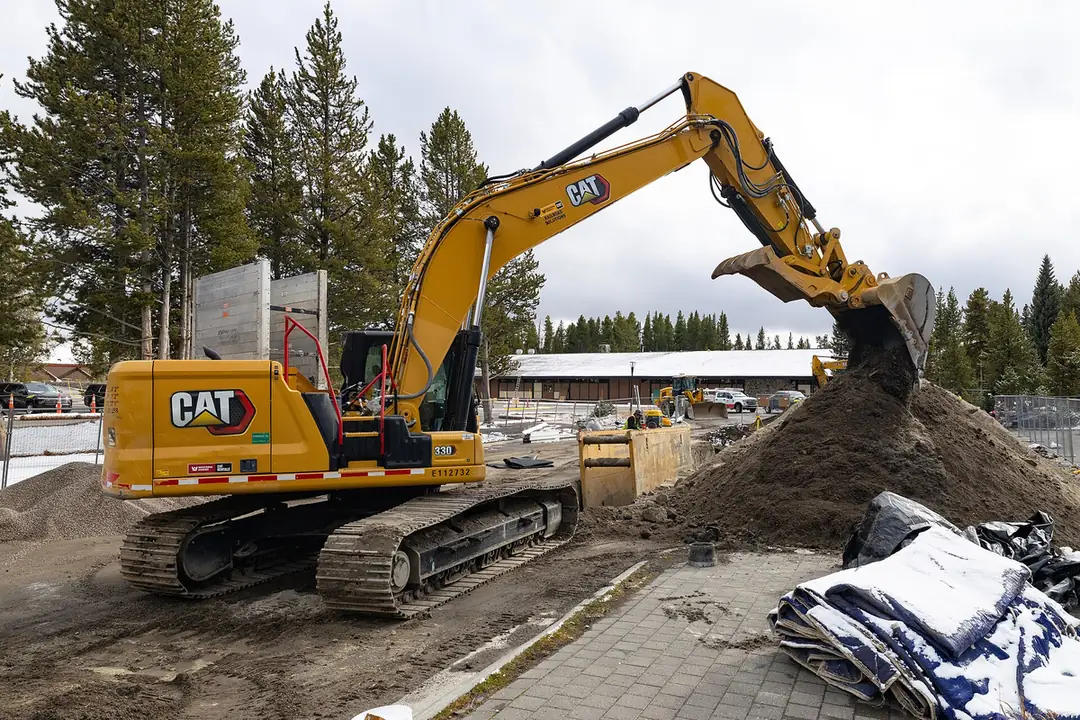
A bursting head pulls a new pipe through the old one, breaking the old pipe outward as it goes. It needs an entry pit and an exit pit, so the yard, driveway and trees in between stay put.
Cured-in-place lining
A resin-soaked liner goes into the old pipe and hardens there, making a pipe within a pipe. It often needs only the cleanout or one small pit. It struggles when the old pipe has collapsed completely, has a deep belly, or changes direction sharply.
Schematic drawing, not to scale. General information, not an inspection of your line.
What it usually costs
- Spot repair, one section dug and replaced: about $1,200 to $5,000
- Cost guides put the typical Aurora sewer repair near $1,000 to $2,600, with deep or complicated jobs well above that
- Add-ons that move the price: depth, digging under a driveway or sidewalk, permit fees, and how far the problem is from the house
Ranges are rough Denver-metro figures gathered from public cost guides and are only a starting point. Your contractor's written quote is the number that counts.
When a spot repair makes sense
A repair is the right call when the camera shows one problem in an otherwise healthy line: a single cracked joint, one root intrusion, or a short broken section. If the inspection shows trouble every few feet, a repair just moves the next failure down the line, and replacement is usually cheaper over time.
Signs your line needs attention
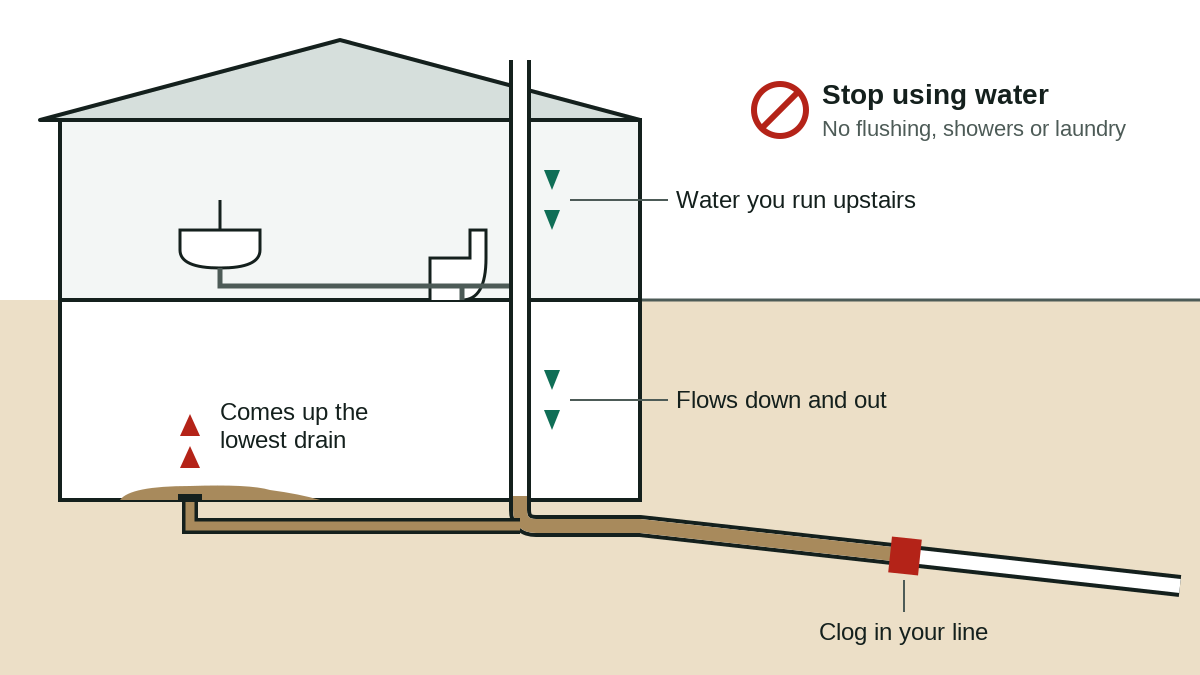
- More than one drain backing up at once, especially the lowest drain in the house
- Gurgling toilets when the washer drains
- Sewage smell in the basement or yard
- A soggy or unusually green strip of lawn between the house and the street
- Clogs that come back within weeks after being cleared
What to ask the contractor
- Can I see the camera footage, and where exactly is the problem (distance from the cleanout)?
- Is this a dig-and-replace repair or a trenchless spot liner, and why?
- Will you pull the permit, and who calls 811 to locate the utilities?
- What pipe material will you use for the new section, and how do you connect it to the old pipe?
- What does the warranty cover, and for how long?
- Ask for their Colorado plumbing license or the local license they work under, and proof of insurance.
Where this service is available
Aurora, North and Original Aurora, Southeast Aurora, Centennial, Englewood, Park Hill (Denver), Lowry and Montclair (Denver).
Get a free quote
Takes about a minute. Questions? Email [email protected].
Related services
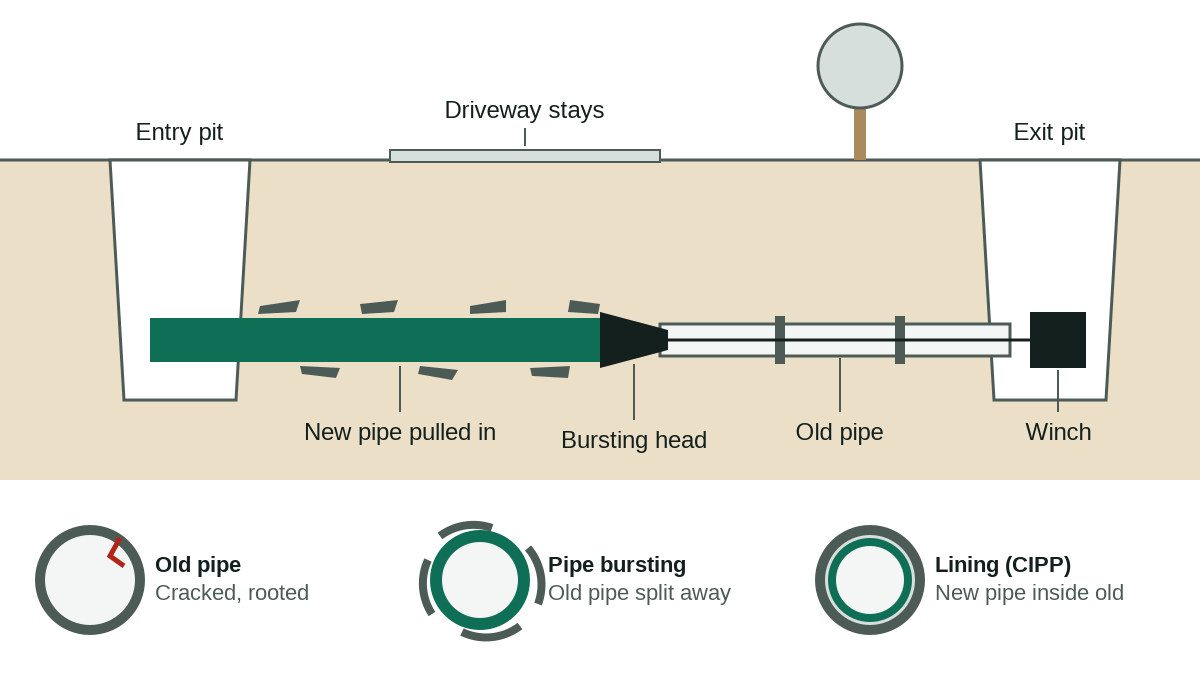
Trenchless sewer replacement
Replace or reline the whole sewer line through one or two small pits instead of a trench across the yard.
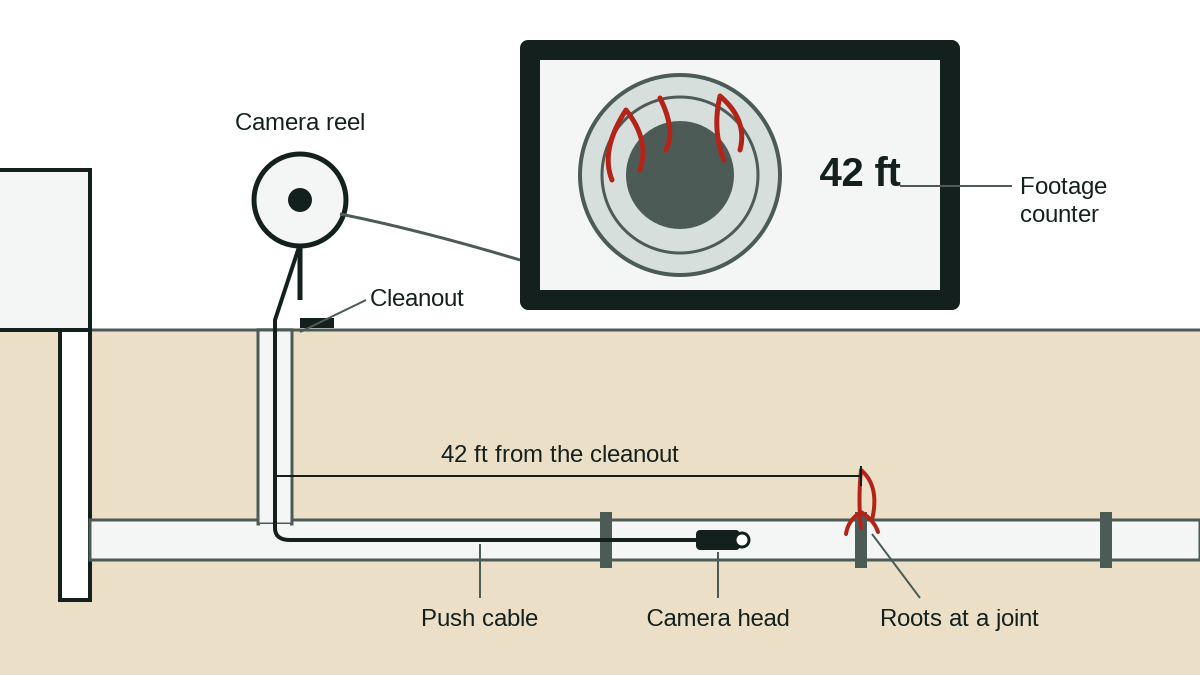
Sewer camera inspection
A camera run down the line to find roots, cracks, sags and old pipe before anyone digs. Smart before buying an older home.
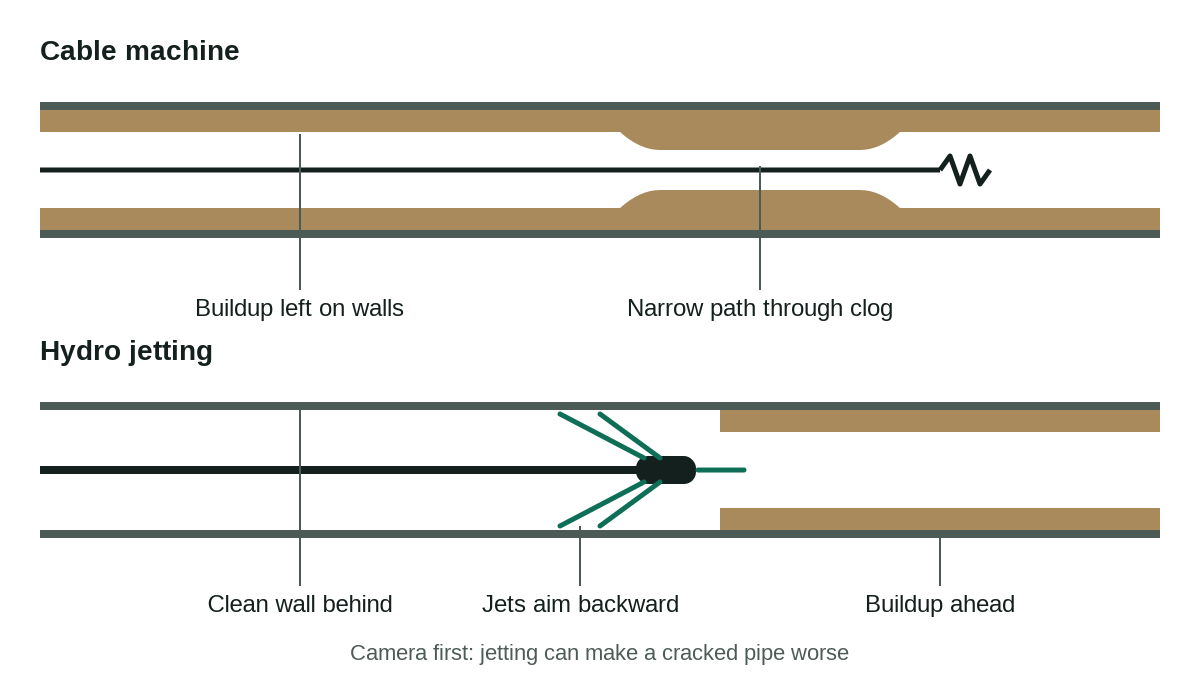
Hydro jetting and main line cleaning
Clear roots, grease and buildup from the main line with a cable machine or high-pressure water.
Emergency sewer backup
Sewage coming up a floor drain or tub. What to do first, and getting a contractor out fast.